


Every founder and GTM leader we talk to right now wants the same thing: an AI agent. Build me an SDR agent. Build me a research agent. Build me an inbox agent. Automate it all.
It's the wrong question.
There is no point in building a fully automated workflow for something that doesn't convert in the first place.
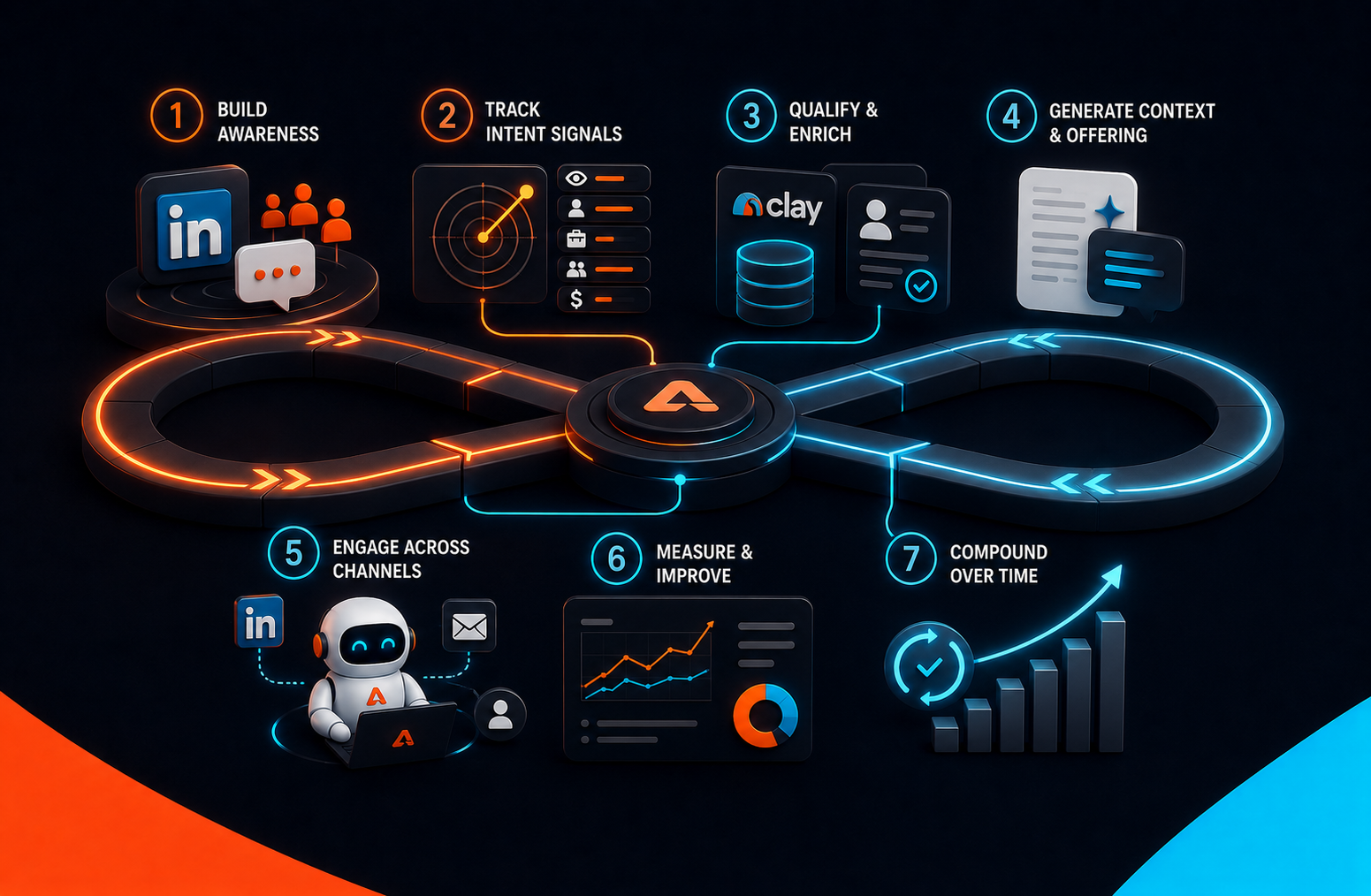
What actually works is what we call allbound: a seven-step system that combines inbound, outbound, and signal-driven motions into one continuous engine. Each step feeds the next. AI agents do not replace, they fit inside that system.
This is the exact framework we use at Peakora that tripled our own revenue over two years.
Step 1: Build Awareness
Before anyone replies to outbound, they need to recognize your name. This happens by showing up consistently in front of the right audience.
For B2B in DACH, that's still LinkedIn. The combination that works:
- Auto-connecting with relevant buyers in your ICP
- A steady stream of content, streamlined with AI
- Thoughtful, AI-supported commenting on your buyers' posts
You're not selling at this stage. You're getting recognized.
Tools: LinkedIn / GetSales / Clay / Claude Code / OpenAI / PhantomBuster
Step 2: Track Intent Signals
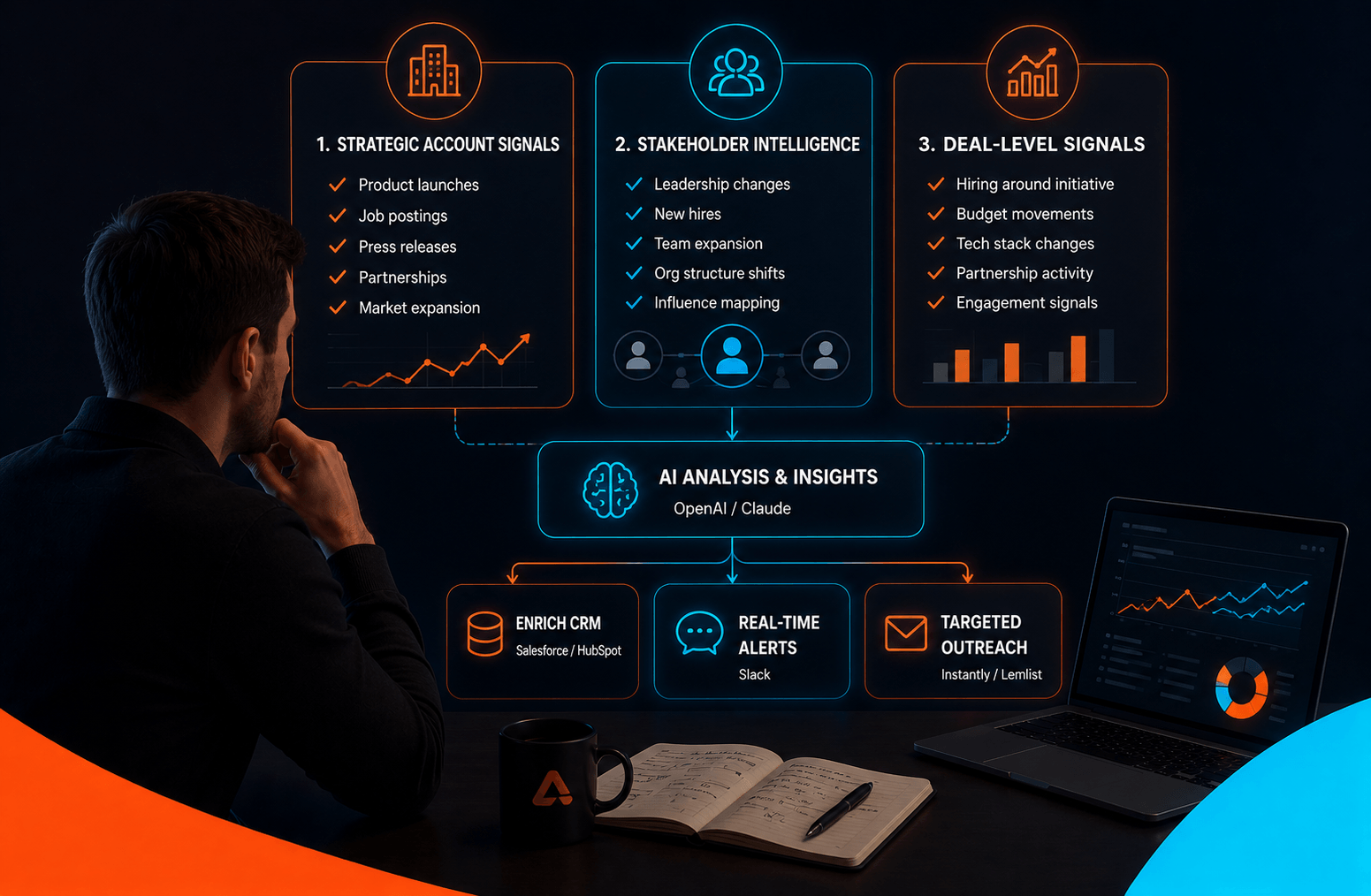
Awareness creates a pool of people who might buy. Signals tell you which ones are ready to act now.
Look out for:
- Engagement with your content → likes, comments, profile visits
- Website visits
- Job changes
- New hires
- Funding announcements
Tools: LinkedIn / Clay / PhantomBuster / API & Webhooks
Step 3: Qualify and Enrich
A raw signal is messy. A funding round on its own doesn't tell you whether the company fits your ICP, who the decision-maker is, or how to reach them.
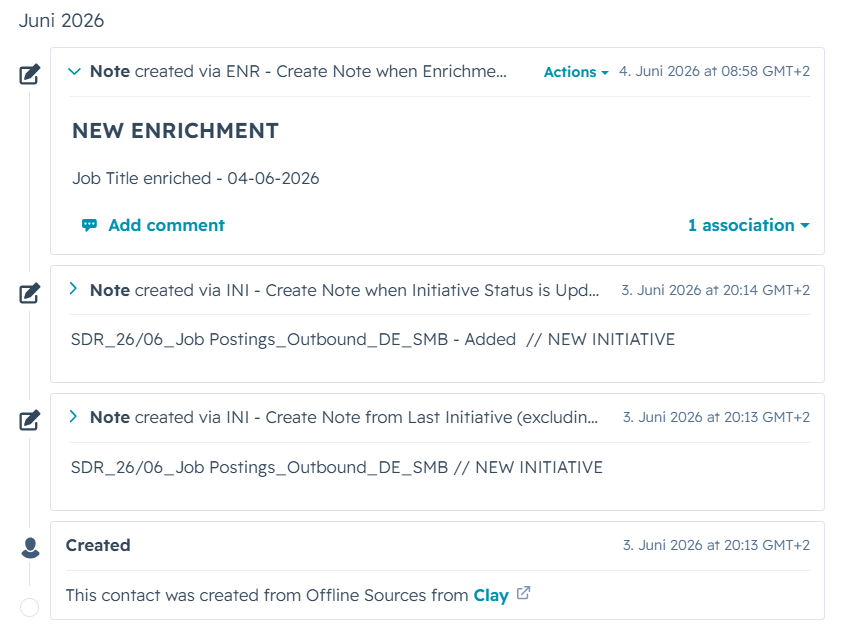
Using Clay makes the difference here: scoring, deduplicating, and prioritizing each signal against your ICP, then layering in firmographic, persona, and contact data to produce a single qualified row.
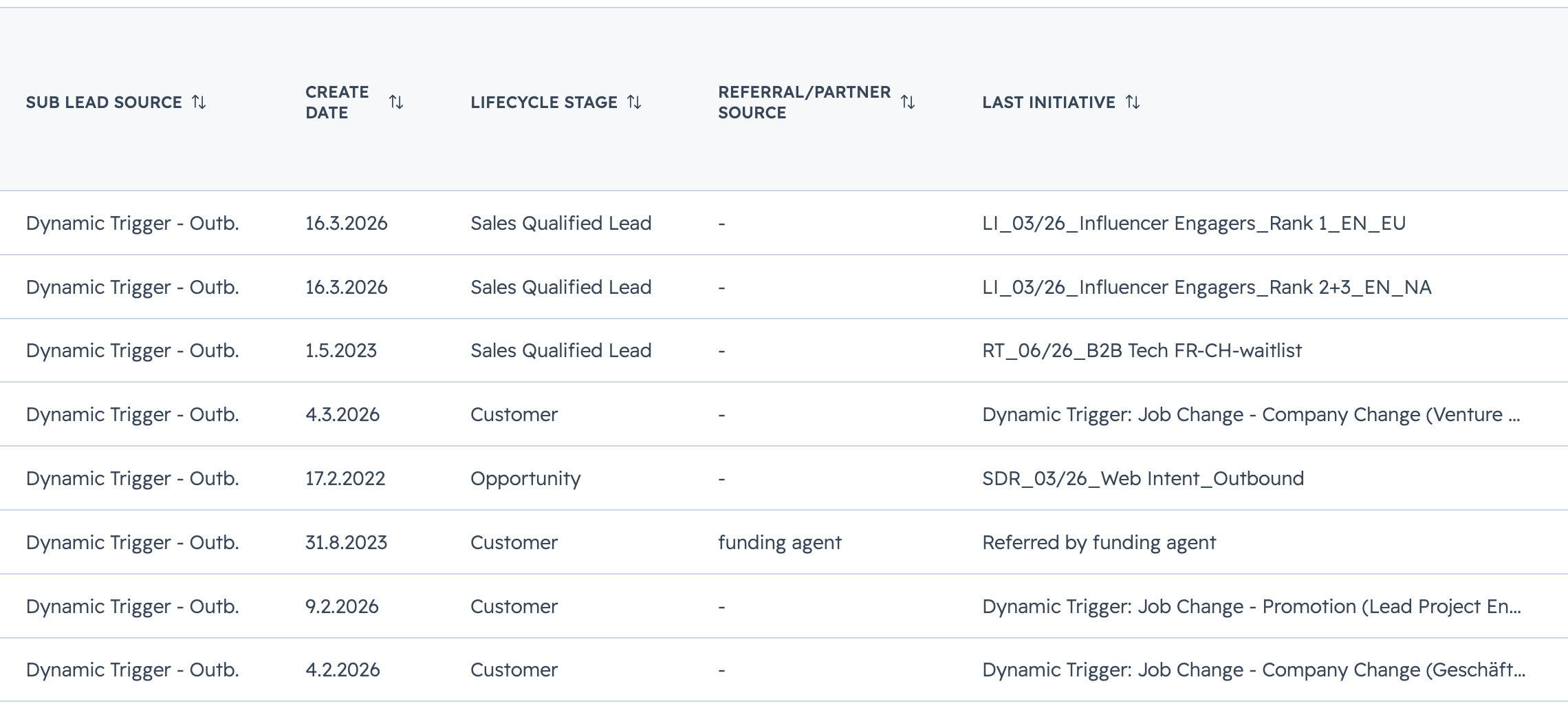
HubSpot is where your clean data lives and records are stored. Workflos help to assign owners, set lifecycle stages, and identify lead sources.
Example:
Monitor Job Change of Champions
Tools: Clay / HubSpot / OpenAI
Step 4: Generate Context and Offering
This is where most automated outbound dies and where AI is actually useful, if pointed at the right job.
Instead of one generic sequence, the system generates messaging per record: referencing the specific signal that triggered it, the company's context, and the persona's likely priorities. A new VP of Sales at a Series A company gets a different opening line than a returning website visitor at an enterprise account.
Tools: Clay / Claude Code / OpenAI
Step 5: Engage Across Channels
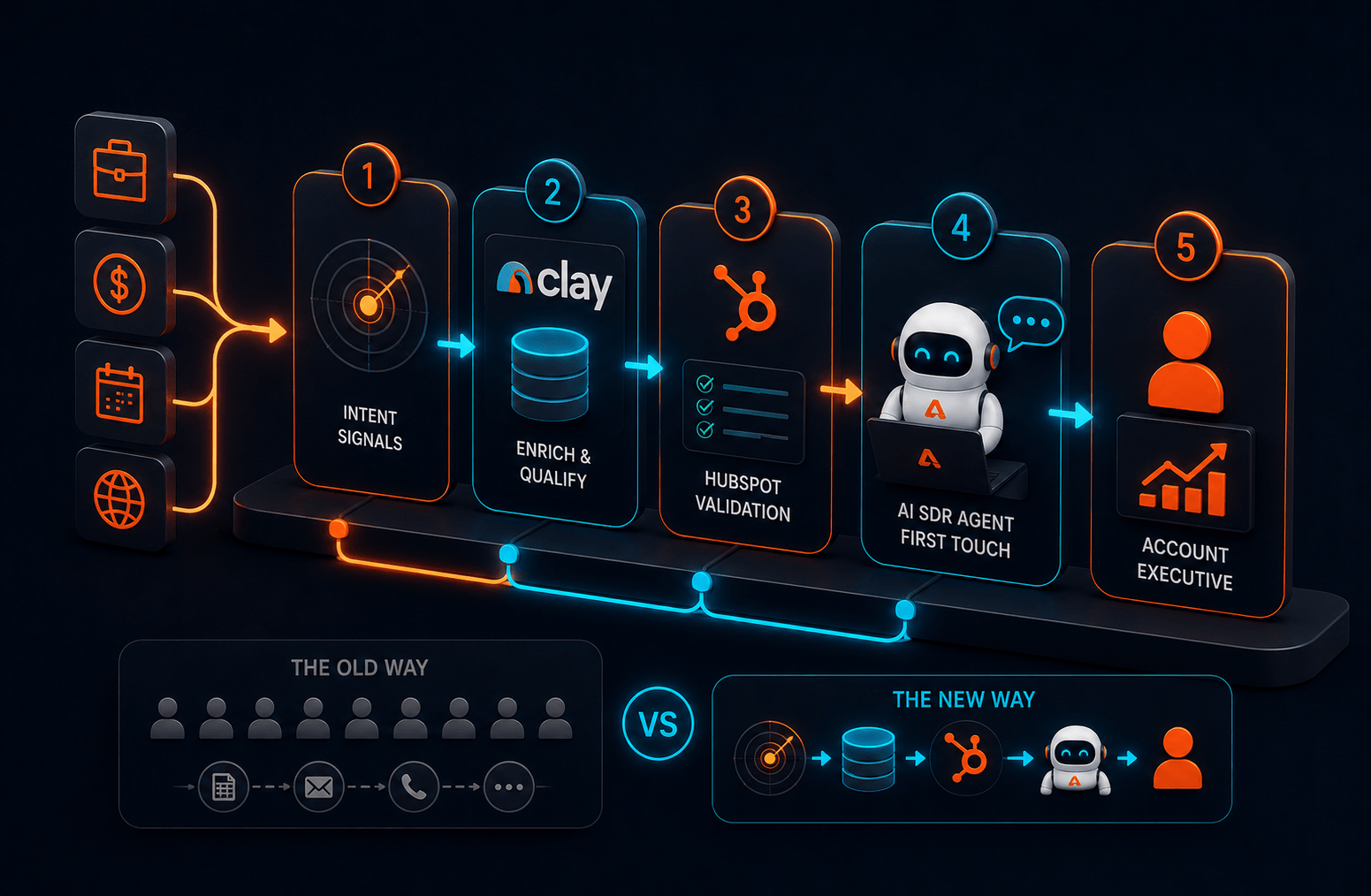
A single channel sequence isn't enough anymore. The system reaches out where the buyer actually pays attention: LinkedIn, email, sometimes a warm intro path. This is also where SDR agents fit. Not as a replacement for sales, but as the layer that handles first touch, sequencing, and follow-up, so your closers stay in conversations.
Tools: GetSales / Instantly / Lemlist
Step 6: Measure and Improve
Volume is not the metric. What matters is:
- Signal-to-conversation rate
- Conversation-to-opportunity rate
- Which signals convert
- What offers book meetings
If you can't see this in HubSpot, you can't improve it. Most outbound systems fail here, not because the data isn't there, but because nobody set up the reporting layer to surface it.
Tools: HubSpot Reporting
Step 7: Compound Over Time
Here's the part nobody puts on a slide: this system doesn't work in week two.
- Convert the people who respond
- Pause the ones who don't
- Re-engage with value when a new, relevant trigger fires
The real magic happens once the system has been running for 6–9 months. it is not about running campaigns, it's about running a continuously updated, signal-driven cycle that reaches the right people at the right time, again and again.

💡 TIP: The order matters: strategy → system → automation → agents. Skip ahead and you'll spend the next six months debugging prompts instead of closing deals.
For us at Peakora, this is the system that tripled our revenue over two years. Not because we automated more, but because we built something that compounds instead of resets.
Ready to get started?
In this session, we will:
- Identify your known and unknown challenges that hinder you from growing your business.
- Get solutions to your problems from GTM experts who’ve scaled high-growth B2B companies.
- Develop a 3-Step action plan that will get you results over the next 90 days.




.png)
