

Most GTM teams still scale headcount. The best ones scale systems.
Most outbound teams are busy. Very few are productive.
The math is brutal: in a traditional setup, about 90% of the effort SDRs and AEs put into prospecting never produces a meeting, let alone a deal. Lists go stale. Sequences blast the wrong people. Tools don't talk to each other. And the team gets bigger every quarter trying to outwork a broken system.
There's a better model and it doesn't start with hiring.
The stack isn't the problem. How it's used is.
The traditional setup hasn't disappeared — it's just got more tools attached to it. Most teams today have Apollo for data, a sequence tool for outreach, and a CRM nobody fully trusts. The SDR team is bigger than last year. Reply rates are lower. And the answer is usually: hire more.
❌ More headcount. More lists. More sequences. Same broken system, just louder.
The shift: the best GTM teams stopped adding people to fix a process problem. They replaced the process itself.
Modern GTM teams don't search for buyers. They build systems that detect when buyers are ready and act automatically.
What a Signal-Driven GTM System Looks Like
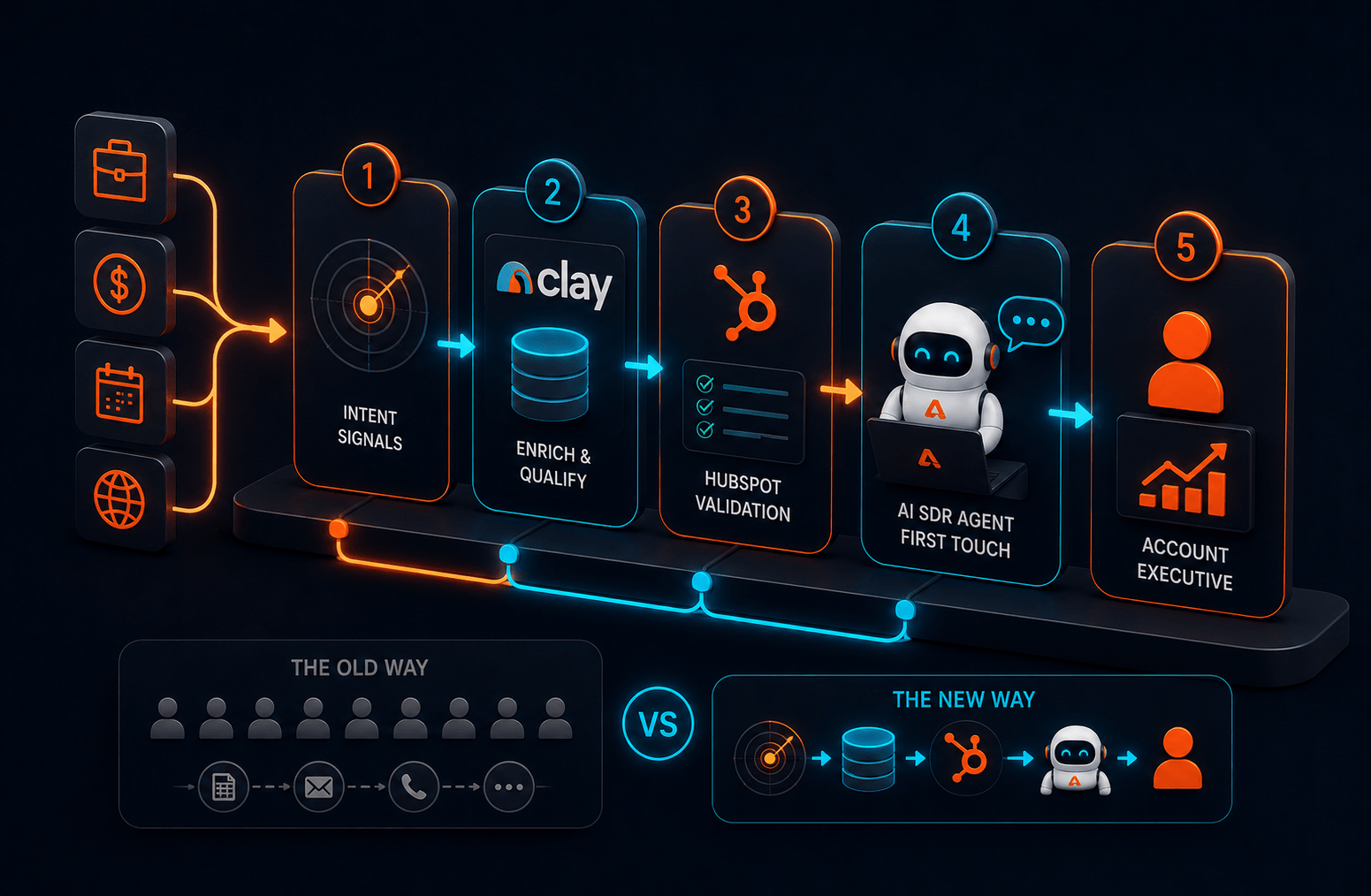
1. Intent Signals
The system listens for events that suggest a company is in-market: someone in your network moving roles, a fresh funding round, attendance at a relevant event, or meaningful website activity. These are the moments that matter. Everything downstream is triggered by them.
2. Data Orchistration
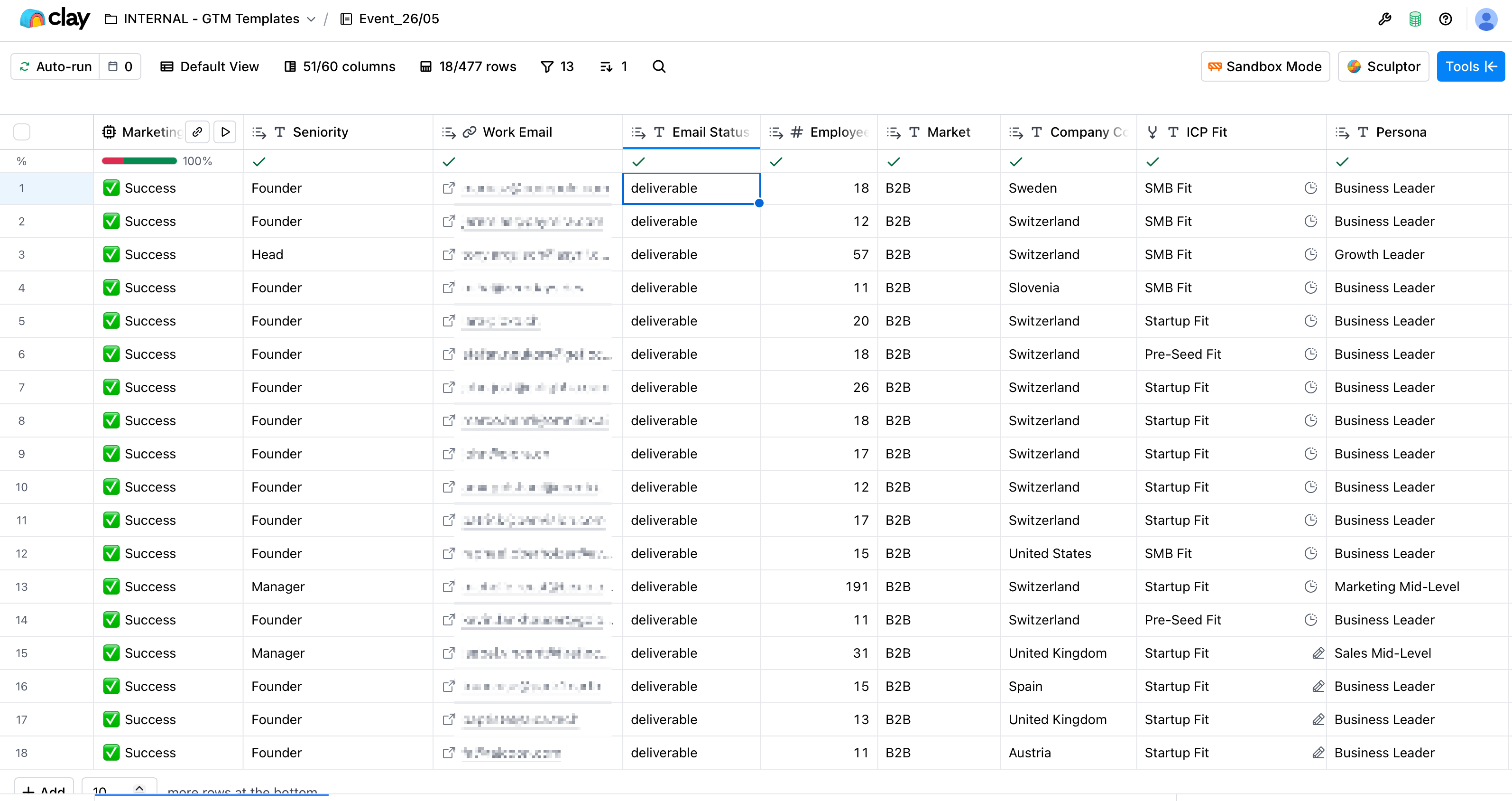
Signals without context are noise. A funding round means nothing if you can't tell whether the company fits your ICP, who the decision-maker is, and how to reach them. Good enrichment qualifies leads before a human sees them. Clay is the category-defining tool here. It enriches each signal with firmographic, persona, and contact data, applies ICP logic, and turns raw intent into a qualified, contactable record.
3. HubSpot validation
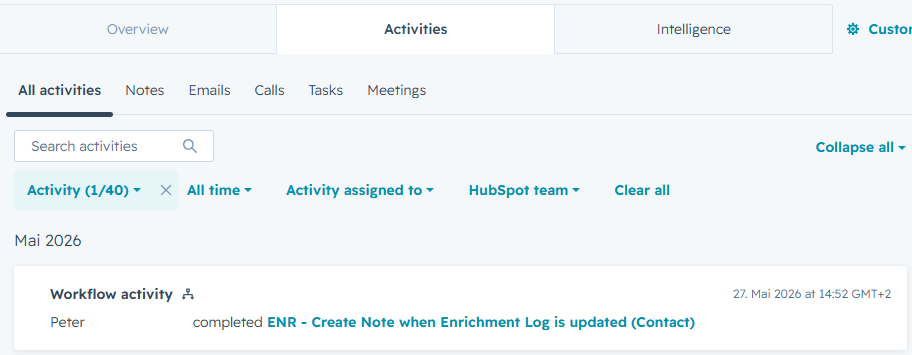
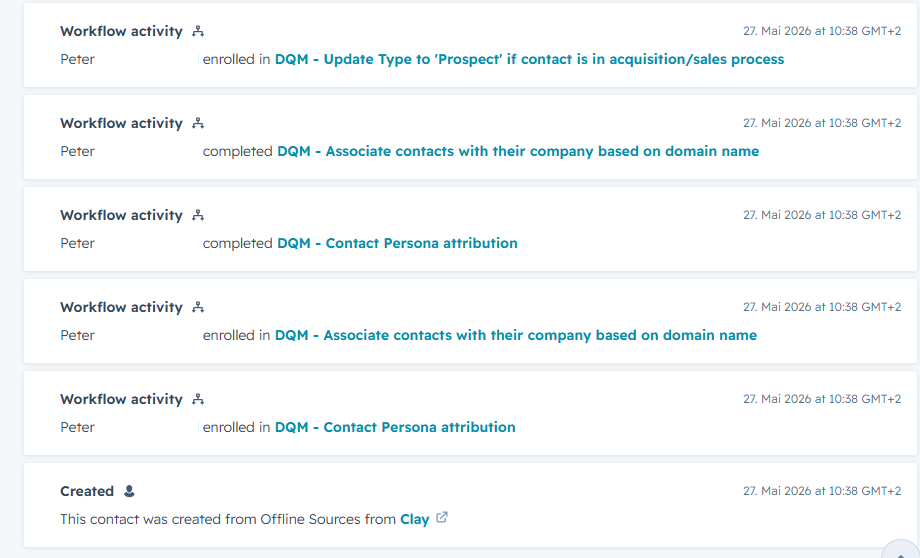
Before anyone, human or AI, reaches out, the record flows into HubSpot. Duplicates are caught, ownership is assigned, lifecycle stage is set, and the contact is created with full context. HubSpot is the system of record. If it isn't clean, nothing downstream works.
.png)
4. An SDR AI Agent runs the first touch
Personalized outreach, sequencing, reply handling, follow-ups. All automated! The agent doesn't replace your closer. It removes the prospecting layer that closers shouldn't be doing.
5. One Account Executive closes
Not four AEs chasing partial pipelines fed by four SDRs. One AE working a clean queue of qualified, in-market conversations.

💡 The result is the same outbound function done by a fraction of the team, with dynamic lists, AI-powered tools, and a fully automated workflow underneath.
Why This Works
Two reasons most teams miss.
Timing. A funding round, a CRO hire, or a returning website visitor isn't just a data point — it's a window. The signal-driven model reaches people inside that window. The traditional model reaches them three weeks later, from a list built last quarter.
Compounding value. You won't convert everyone on the first outreach. But continuous, trigger-based outreach using fresh signals keeps you top-of-mind. Some will convert at the first signal. Some only at the fifth.
Value + Timing = Conversion.
Over time, the right message at the right moment wins. It's not about reaching out once at the right time. It's about having a system that delivers real value consistently, driven by the right signals.
How to Start
🔎 Audit where time actually goes today. Prospecting and admin usually eat 50–70% of a rep's week.
🚨 Pick one high-intent signal. Funding rounds and job changes are the highest-quality public intent data available.
🛠️ Build one workflow end-to-end for one segment: Signal → Enrichment → CRM → AI first-touch → AE.
⏰ Measure meetings booked and opportunities per rep-hour, not activity volume.
✅ Expand on what works.
Our own result with this system:
3x more new opportunities generated. 90% fewer manual tasks for sales. The team now focuses on high-quality conversations — not chasing down leads.
It's not about the tools. It's about the system behind them.
Ready to get started?
In this session, we will:
- Identify your known and unknown challenges that hinder you from growing your business.
- Get solutions to your problems from GTM experts who’ve scaled high-growth B2B companies.
- Develop a 3-Step action plan that will get you results over the next 90 days.